

Results of Public Monitoring in the Khorezm Region
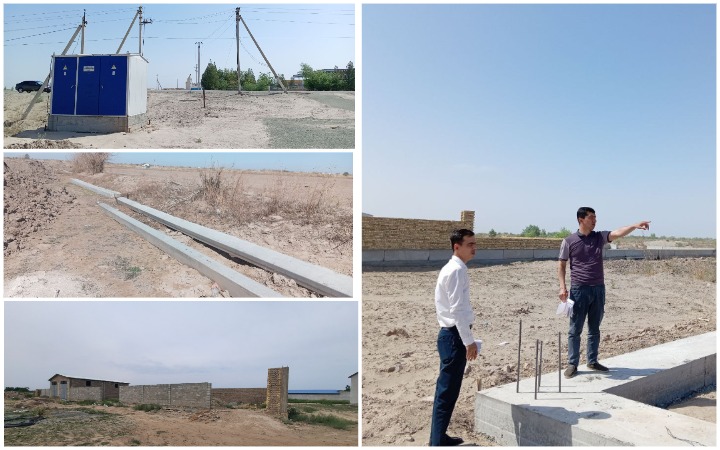
On May 6–7, 2024, the Khorezm regional branch of the “Yuksalish” movement, in cooperation with the Public Council under the regional administration, conducted a monitoring exercise to assess the implementation of initiatives for the establishment of youth industrial and entrepreneurial zones in the Bogot, Kushkupir, Khanka, and Urgench districts. This initiative aligns with Presidential Decree No. 5088 of 2022. A total of 26.6 hectares of land have been allocated for these zones across the region.
In the Bogot district, five hectares have been allocated. Although 18 projects have been designated for development in this area, construction has not yet begun on any of them. The zone is connected to electricity and gas networks, but lacks both water supply and sewage systems. Additionally, the access roads are in poor condition.
In the Kushkupir district, four projects have been established within the youth industrial and entrepreneurial zones. Two remain at the stage of incomplete construction, while one is still at the foundation stage. The zone is connected to electricity and gas infrastructure; however, it lacks a water supply, and the roads are in need of repair.
In the Khanka district, of the 31 registered projects, only one has been commissioned, one remains at the foundation stage, and another remains unfinished. Although the area is connected to electricity and gas, the issues of water supply and sewage systems remain unresolved. The access roads are also in unsatisfactory condition.
In the Urgench district (Chotkupir village), 17 projects with a total value of 8.05 billion soums have been allocated across one hectare of land. Thirteen of these projects are currently being implemented, while four have been suspended. The initiative is expected to create 108 new jobs. However, similar to the other districts, the zone lacks water supply and sewage infrastructure, and the roads require significant improvement.
The main challenges faced by these zones include the absence of water supply and sewage systems, slow implementation of projects, and poor road infrastructure, all of which significantly hinder the development and effectiveness of these initiatives.