

Anti-Corruption Laboratory Assessed Integrity and Corruption Risk Factors in Higher Education and Healthcare
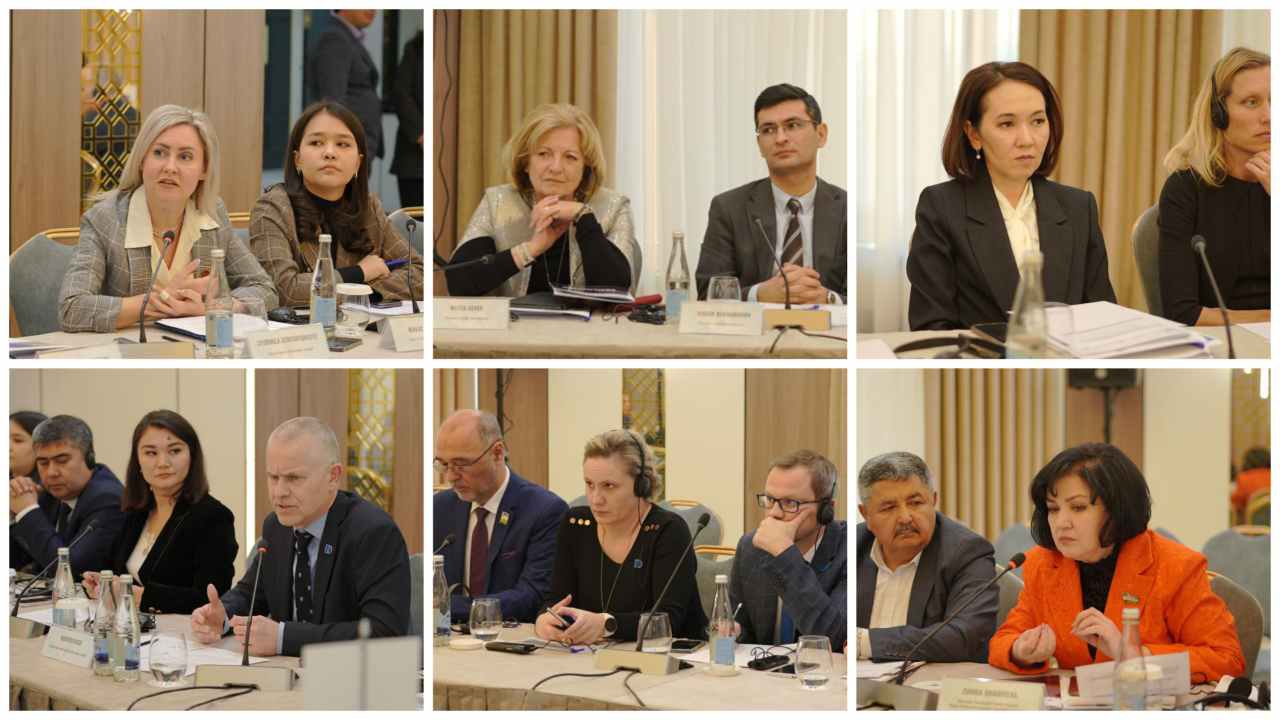
On December 1, the preliminary findings of the assessment of integrity and corruption risk factors in the higher education and healthcare were presented at a public discussion in Tashkent. The event took place as part of the anti-corruption month.
The study was conducted within the framework of the "Anticorruption Laboratory" project, which has been implemented since 2020 in cooperation with the Nationwide Movement "Yuksalish", the Anti-Corruption Agency and the International Non-Governmental Organization "Regional Dialogue" (Slovenia).
It is known that the "Roadmap" for the implementation of the Concept of Civil Society Development in 2023 - 2024, approved by the decision of the Cabinet of Ministers, envisages strengthening of public oversight in the fields of education, healthcare, fight against corruption by the Nationwide Movement "Yuksalish", as well as development of proposals and recommendations. In line with the Roadmap, Yuksalish conducted 2 simultaneous studies this year:
- “Assessing Factors of Integrity and Corruption Risks in Student Performance Grading in Higher Education”;
- “Assessing Factors of Integrity and Corruption Risks in Obstetrics”.
To date, 16 higher education institutions in 14 cities from all regions of our republic have been covered by the research conducted in higher education institutions. Different groups of respondents - representatives of the Ministry of Higher Education, Science and Innovation, rectors, vice-rectors, deans, heads of the educational department, compliance-control department and education quality department, professors and teachers, students, NGOs and researchers, a total of about 200 people were involved. Social surveys and interviews were organized among them.
74.4 percent of the survey participants believe that there is influence on teachers in assessing student learning and improving previous grades. According to 19.4 percent of respondents, organizational deficiencies in the credit-module system are the cause of corruption.
Most of the respondent groups (76.7 percent) believe that corrupt conduct is initiated mainly by students, and 34.3 percent - by teachers. Another 25.4 percent answered that the initiative comes from relatives of students.
Almost 28 percent of respondents in the survey indicated that there would be pressure from students to change a low grade to a high grade in order to receive a higher scholarship.
Factors:
- Students' interest in high amount of scholarship is causing them to engage in corrupt behavior while taking intermediate exams
- Personal information entered by the teacher on the HEMIS platform (Higher Education Management and Information System that allows for online management of the educational process) is available to the dean's office and students. Therefore, there is a possibility that a third party can see the information on the platform and make changes to it.
- Internet plagiarism is caused by the lack of an information base and software for checking students' independent work for plagiarism in most higher education institutions and in the republic as a whole
- Due to the fact that the credit-module system has not been fully implemented in higher education and there are no legal documents regulating this activity, each higher education institution is approaching the organization of this system based on its capabilities and powers. This also creates a risk of bias towards the assessment of student knowledge.
21 maternity hospitals in 7 regions of our republic were covered by the research on "Assessing Factors of Integrity and Corruption Risks in Obstetrics". About 400 people took part in it. Different groups of respondents - representatives of the Ministry of Health, chief doctors of maternity hospitals, obstetricians-gynecologists, neonatologists, anesthesiologists, resuscitators, therapists, obstetricians and nurses, women in childbirth period, their relatives took part in discussions, interviews and questionnaire surveys.
Preliminary results showed that corruption risk factors are primarily related to the lack of budget funds and equipment for state maternity hospitals, and uneven distribution of budget funds between perinatal centers and local maternity hospitals. Also, underpayment and overload of medical staff ranks among major factors.
It was found that 8.4% of women in childbirth period and 8.8% of their relatives involved in the study made informal payments for admissions in perinatal centers.
70% of therapists, neonatologists, obstetrician-gynecologists, anesthesiologists, 60% of relatives, and 50% of nurses perceive "sincere" gifts (money, rewards, etc.) at the time of childbirth as positive.
Also, the study of factors of integrity violations between medical workers in maternity hospitals and pharmaceutical companies showed that 10 percent of doctors believe that there is an agreement between the administration of the maternity hospital and pharmaceutical companies. 24 percent of medical workers indicated that cooperation with pharmaceutical companies increased their overall income. All (100 percent) of the interviewed relatives of women in childbirth period confirmed that in the event of shortage of medicines, doctors would ask them to buy those medicines in specific drug stores.
The final results of these studies, taking into account the opinions, suggestions and recommendations of experts in the relevant field, are planned to be published in early 2024.
The event was organized by the Nationwide Movement "Yuksalish" in cooperation with the Anti-Corruption Agency and the International Non-Governmental Organization "Regional Dialogue" (Slovenia).
Press service of the Nationwide Movement "Yuksalish"