
Findings of the Survey on Corruption Risk Factors in Founding and Operating PPP-Based Kindergartens Have Been Published
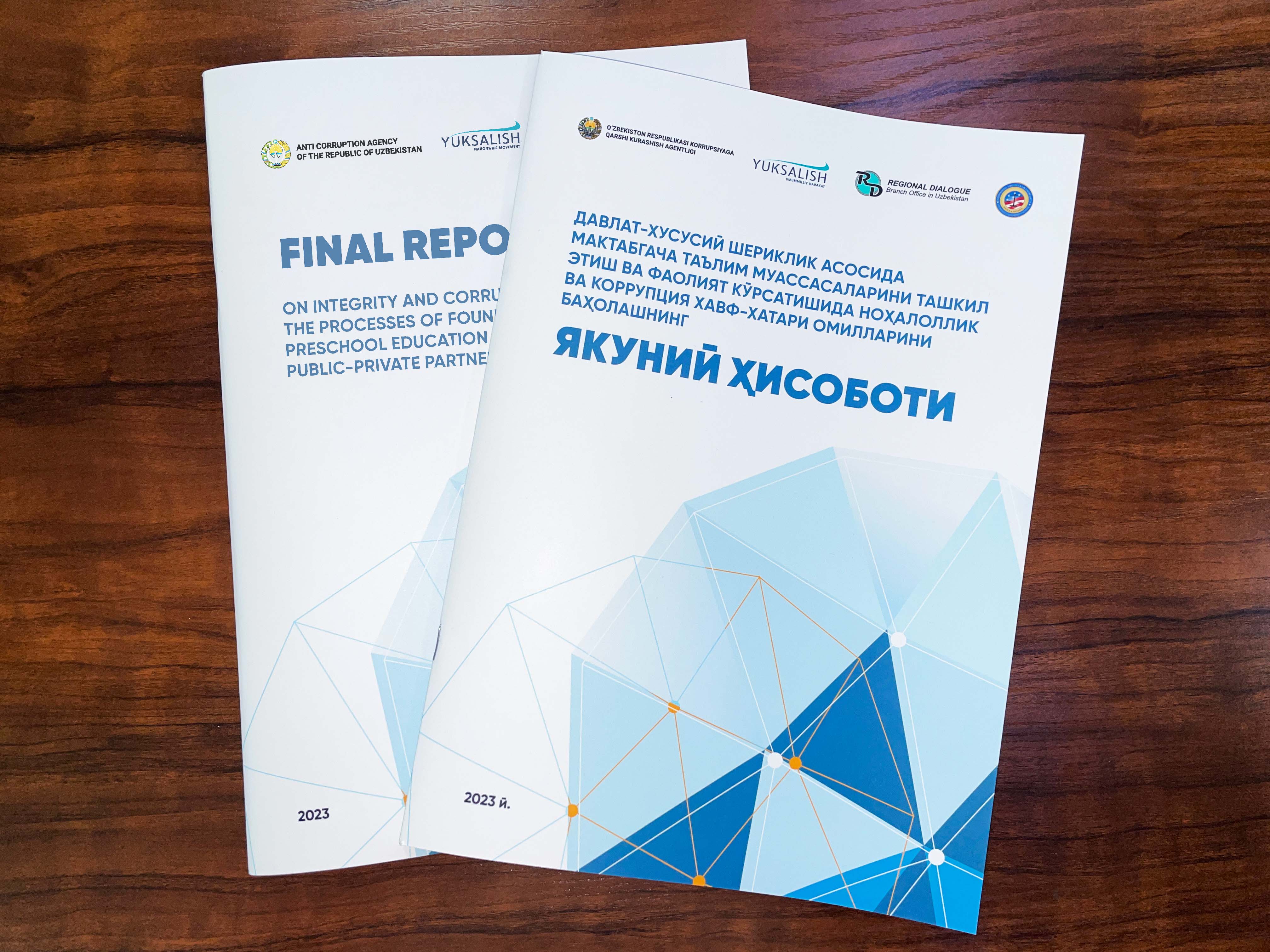
In 2022, the Anti-Corruption Laboratory assessed integrity and corruption risk factors in the creation and operation of preschool educational institutions on the basis of public-private partnership (PPP).
For information: Since 2020, the Anti-Corruption Laboratory project has been implemented by the Nationwide Movement Yuksalish with the support of the Anti-Corruption Agency of Uzbekistan and the Regional Dialogue Branch Office in Uzbekistan. It is an expert platform that allows assessing corruption risk factors using various methods of analyzing statistical data, scientific and media content, legislation, surveys of target groups countrywide, and international experience. The first, experimental stage, focused on studying corruption risk factors in admission to primary school, while the second laboratory studied the risks in public-private partnership in preschool education.
The questionnaire survey was conducted in the form of interviews and focus groups in seven regions of the republic - the city of Tashkent, Andijan, Bukhara, Samarkand, Surkhandarya, Kashkadarya and Tashkent regions. The survey covered 413 people from different groups of respondents: representatives of district departments of preschool education, khokimiyats, banks, heads of PPP-based preschool educational institutions (PEI), parents of kindergarten children. The study also assessed the processes of preparation of PPP projects, their selection, signing agreements, and implementation of selected projects in the three forms of PPP in preschool education, most demanded among entrepreneurs.
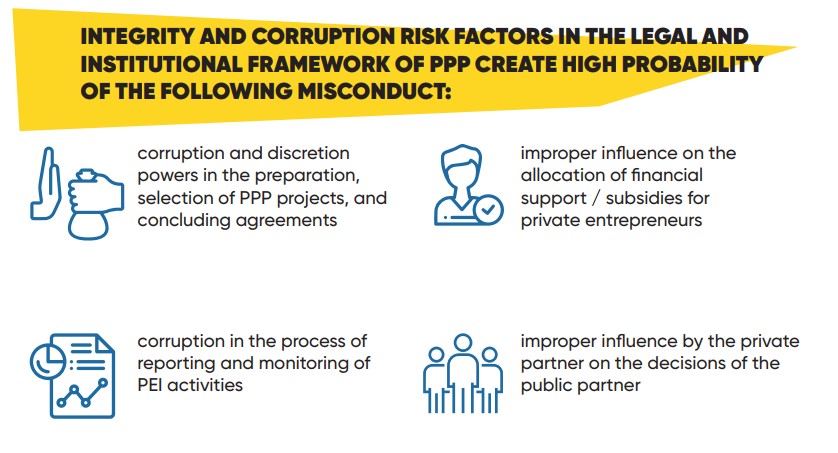
The institutional and legal analysis and the findings of the survey showed the inefficiency of certain PPP processes and procedures, which are factors of corruption risks. Specifically, the lack of transparency in the process of submission and processing a PPP-application project, its selection, reporting mechanism in the operation of kindergartens, document management system, and monitoring of PEI activities create the ground for integrity and corruption risks. The lack of clear criteria for selecting projects, indicators of the quality of educational services, anti-corruption mechanisms and integrity guarantees for all participants in the PPP process also causes risks.
Thus, more than half of the interviewed entrepreneurs (53%) responded that the selection process is not open or unbiased. Every third of them believes that some tenders are held solely for the purpose of obtaining subsidies, and not of achieving the goals set.
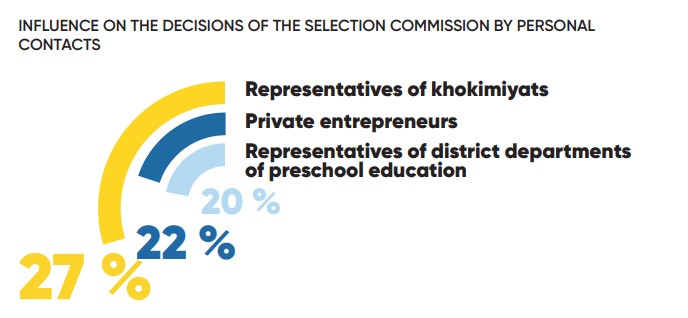
Meanwhile, every fifth respondent from among the specialists of district khokimiyats and preschool education departments believes that entrepreneurs influence the results of competitive selection by providing personal services to members of the commission, attracting authoritative persons or monetary remuneration. 22% of entrepreneurs who participated in the selection process also believe that there are mechanisms to influence the decision of the selection committee.
68% of representatives of district preschool education departments are not aware of sanctions for the state partner when it violates the integrity rules when interacting with an entrepreneur. 73% do not know if there are such sanctions for entrepreneurs.
Every fourth representative of district departments of preschool education states cases of overestimation by entrepreneurs of the actual number of children in preschool institutions in order to obtain additional subsidies.
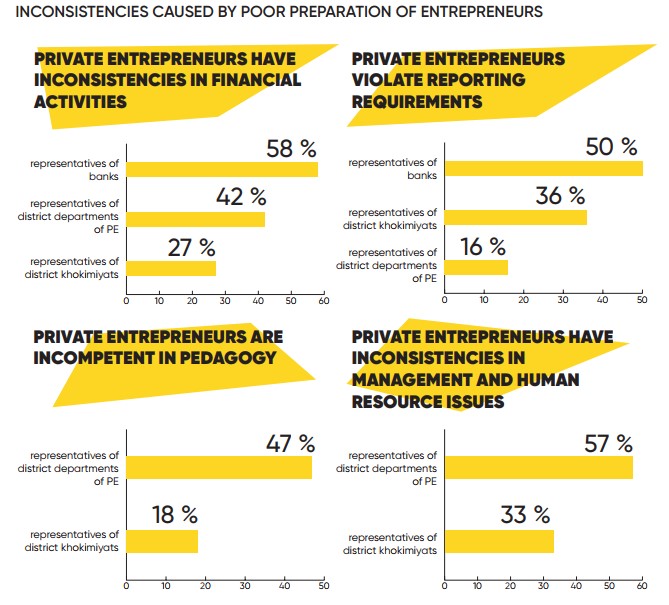
One-third of respondents from district khokimiyats claim that private entrepreneurs violate reporting requirements in organizing preschools on a PPP basis. 27% of khokimiyat specialists and 58% of banks believe that entrepreneurs have financial inconsistencies.
47% of representatives of district preschool education departments think that entrepreneurs are not competent in pedagogical issues, 42% - in the organization of financial activities, and 36% - in human resources policy. One-third of representatives of district preschool education departments believe that entrepreneurs violate ethical standards and one in five that businessmen do not have the necessary managerial competence.
Based on the results of the study, the experts developed recommendations to reduce corruption risks:
- Development and implementation of a mechanism to ensure maximum transparency in the organization of the activities of PPP-based PEI ranging from the preparation of project documentation to the delivery of reports.
- Introduction of the mechanism of public monitoring of all activities of organization of PEI based on PPP to provide an external independent audit, such as mahalla, defining specific assessment criteria (indicators).
- Re-engineer the system of monitoring activities of preschool institutions based on PPP with the introduction of mechanisms of public oversight, unification, and standardization of all types of reporting, ensuring the publication of reports in open data format to prevent corruption risks.
- Clearly and legislatively define the rights, duties, and responsibilities of private entrepreneurs, relevant departments of the Ministry of Preschool and Public Education, khokimiyats, partner banks, and bodies that license and monitor the activities of preschool institutions based on PPP.
- Approve ethical norms and rules of integrity. Assign additional benefits for efficiency or introduce sanctioning mechanisms for identified violations.
- Stipulate the scope of minimum educational services for preschools based on PPP and introduce criteria and assessment indicators for the educational process.
- Organize professional development courses on management, financing, legal and pedagogical literacy, and establishment of effective interpersonal relations for all participants in the process.
The findings are available in the final report Download
Press Service of the Nationwide Movement Yuksalish